From Home Business to a Cafe: SFA Licensing and Renovation Rules Explained

From Home Business to a Cafe: SFA Licensing and Renovation Rules Explained
Taking the leap from a thriving home-based business to your very first physical cafe is an incredible milestone. You have spent months, perhaps years, perfecting your recipes and building a loyal customer base right from your HDB kitchen. It is an exciting time, but stepping into the commercial world also comes with a harsh reality check: commercial compliance.
Transitioning to a brick-and-mortar space is not just about bringing your Instagram aesthetic to life. It requires navigating a maze of government regulations. If not planned properly, these rules can delay your opening by months and severely drain your capital.
At Skai Atelier, we understand the emotional and financial weight of this transition. As a specialized F&B interior designer, our core philosophy is balancing your captivating story-driven aesthetics with seamless, compliant operations. Here is what you need to know about licensing and renovation rules before you build your dream cafe.
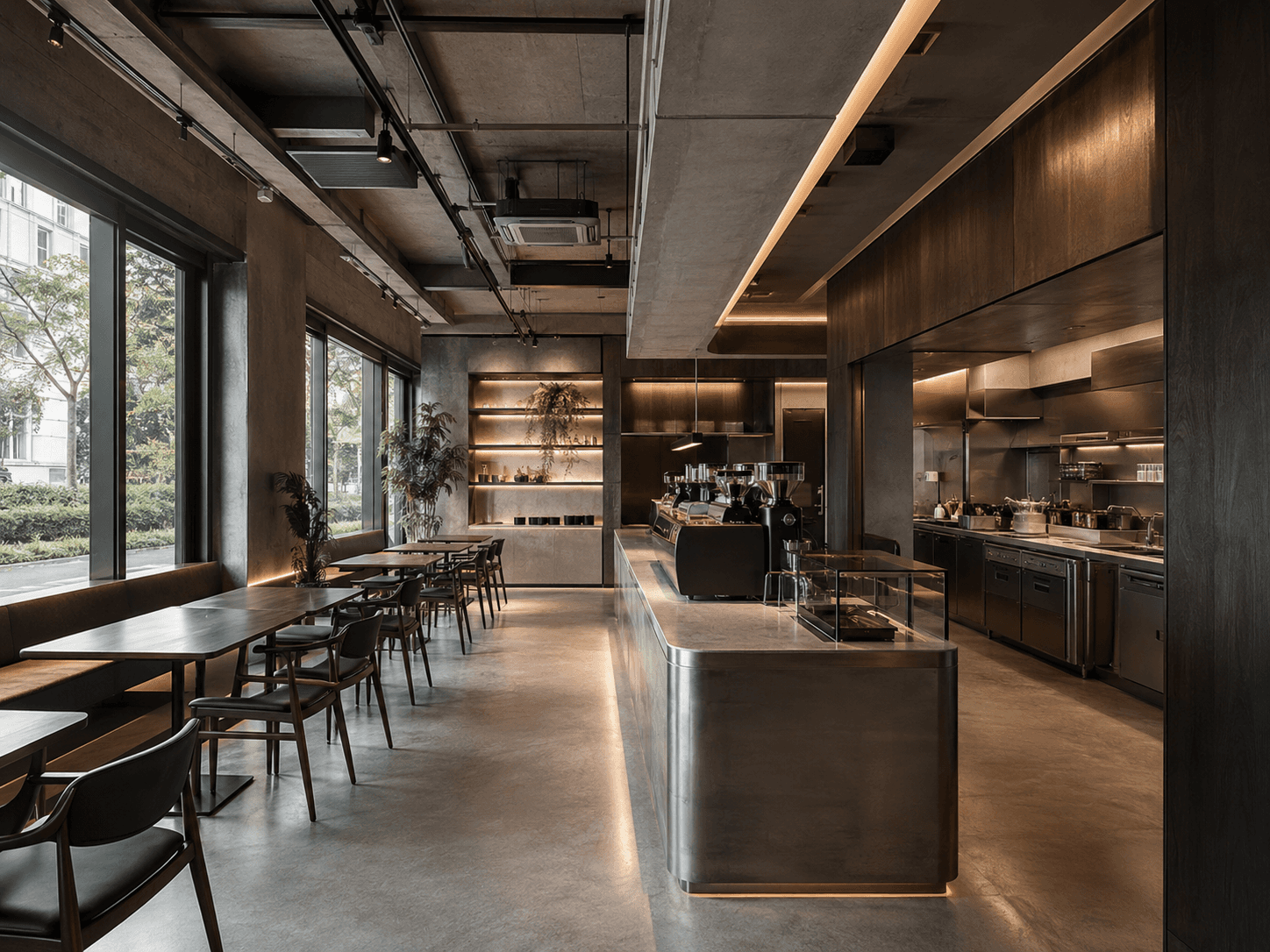
1. URA Change of Use: The Crucial First Step
Before you even think about your cafe interior design in Singapore, you must verify if the unit you are eyeing is legally allowed to operate as a cafe.
The Trap: Just because a unit has water points does not mean it is zoned for Food & Beverage. If the previous tenant ran a retail clothing shop, you cannot simply move in and start baking.
The Solution: You must apply for a "Change of Use" from the Urban Redevelopment Authority (URA). This approval is never guaranteed. A seasoned interior designer for cafe projects will always advise you to make your tenancy agreement subject to URA approval so you are not locked into a useless lease.
2. Decoding SFA Licensing for Your First Cafe
The Singapore Food Agency (SFA) has strict layout and material requirements that dictate exactly how your commercial kitchen must be built. A home kitchen allows for flexibility; a commercial kitchen does not.
Materiality Rules: SFA mandates that food preparation areas must have non-slip, light-colored, and easily cleanable floor tiles. Walls must be tiled to a minimum height to prevent grease buildup. You cannot use beautiful but porous materials like raw timber in your prep zones.
Workflow Separation: SFA requires a strict one-way workflow to prevent cross-contamination. Your raw ingredients receiving area cannot cross paths with your clean, ready-to-serve food stations.
Washing Facilities: You will need dedicated, separate sinks for handwashing, food washing, and equipment washing. A double-bowl sink is the absolute minimum requirement.
3. FSSD (Fire Safety): The Hidden Budget Eater
Fire safety compliance is often the biggest shock for first-time F&B owners. The Fire Safety and Shelter Department (FSSD) has rigorous standards for commercial spaces.
Exhaust Systems: If you are cooking or baking on-site, you need a commercial exhaust system. This must be routed safely to the exterior of the building, which requires specialized mechanical and electrical (M&E) planning.
Sprinklers and Alarms: Moving walls or altering the ceiling design often means you have to relocate fire sprinklers and smoke detectors. This work must be done by certified professionals and submitted to FSSD for a Fire Safety Certificate (FSC) before you can legally open your doors.
4. Why You Need a Specialized Cafe Interior Designer
Many new owners try to manage the renovation themselves to save money, only to face heavy fines or forced closures due to failed SFA inspections.
Successful F&B interior design in Singapore is a highly technical discipline. Working with an experienced cafe interior designer means you have an expert who understands how to hide grease traps, map out compliant exhaust routes, and design a layout that passes SFA inspections on the very first try. We handle the technical headaches so you can focus on refining your menu and training your new staff.
About the Author
This article was written by the team at Skai Atelier, an interior design studio specialising in cafe renovation Singapore, F&B interior design, and commercial renovation Singapore projects.
FAQ: Café Renovation Cost Singapore
1. Can I use my home baking equipment in my new commercial cafe?
Generally, no. Commercial spaces require commercial-grade equipment or they may not withstand the frequent usage of the equipment. Domestic ovens and fridges often do not meet these rigorous commercial standards.
2. How long does it take to get SFA approval for a new cafe?
If your layout is perfectly compliant, SFA processing typically takes a few weeks after the final inspection. However, the entire timeline—including URA approval, FSSD submission, renovation, and the final SFA inspection—usually takes between 1 to 3 months. Engaging a professional design-build firm helps compress this timeline.
3. Do I need an exhaust hood if I am only baking pastries and making coffee?
It depends on the volume and specific equipment. While heavy cooking (frying, grilling) absolutely requires a massive exhaust system, light baking and coffee making sometimes only require a localized condensation hood or sufficient mechanical ventilation. We always verify this with the building management and SFA during the initial space planning phase.
4. What happens if I sign a lease but URA rejects my Change of Use application?
If your tenancy agreement did not include a "subject to URA approval" exit clause, you are legally bound to pay rent for a unit you cannot use for your F&B business. This is why having an interior design consultant evaluate the unit before you place your rental deposit is a critical safety measure.
5. What is the difference between a home business and a brick & mortar store
5. What is the difference between a home business and a brick & mortar store
6. How do I get an initial quote for my project?
The best way is to Book a Discovery Call through our website. During this session, we discuss your budget, functional requirements, and design preferences to provide a transparent and comprehensive preliminary estimate.