The "Atrium" Layout: Zoning Your Singapore Office for Focus, Collaboration, and Wellness
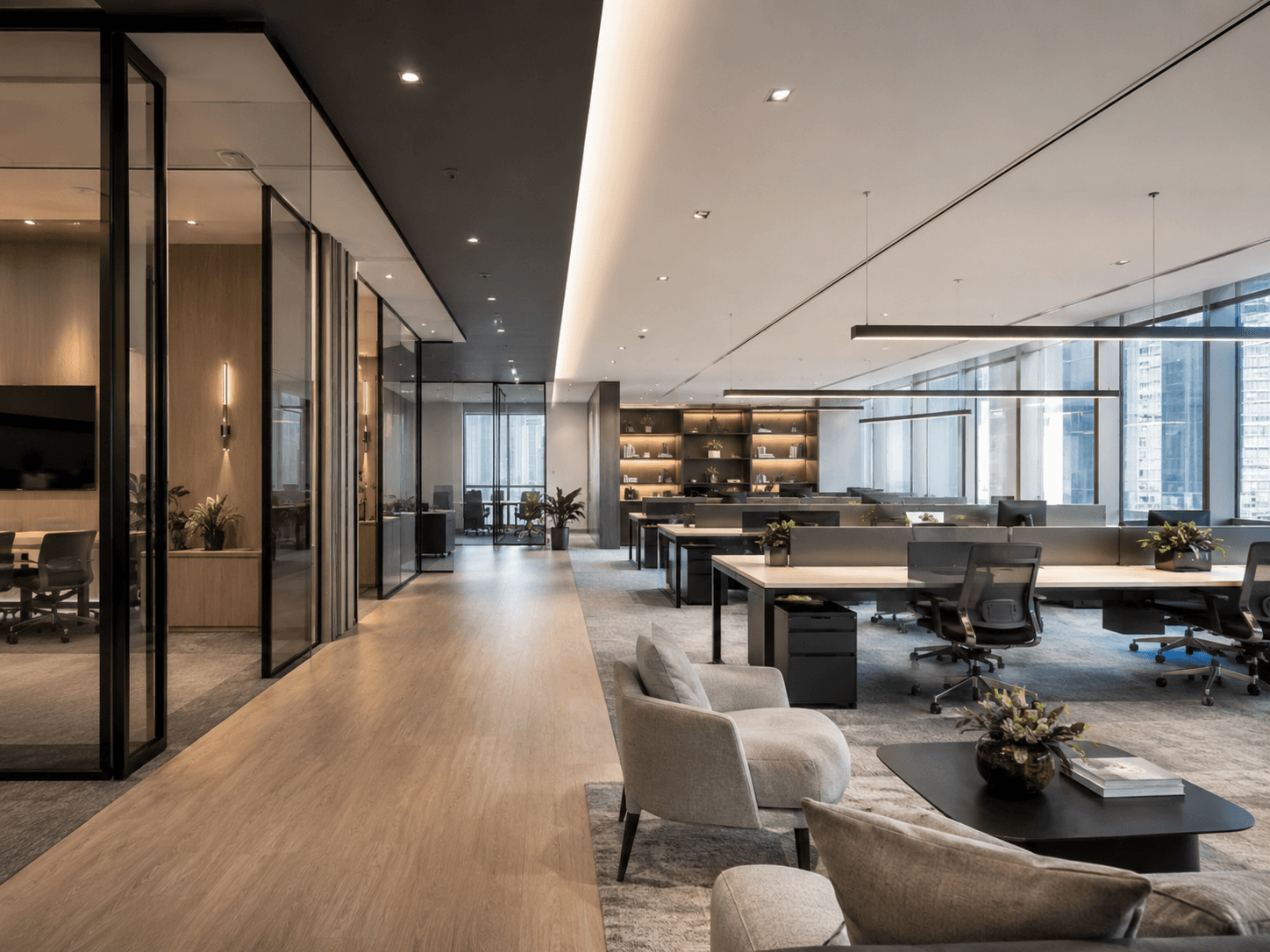
The "Atrium" Layout: Zoning Your Singapore Office for Focus, Collaboration, and Wellness
The great debate over the open-plan office is over: a completely open floor plate is disastrous for deep focus, while isolated cubicles kill collaboration. As companies mandate a return to the CBD, they face a critical challenge. How do you design a workspace that supports the loud, messy process of teamwork without destroying the quiet environment needed for concentrated tasks?
At Skai Atelier, we solve this through advanced spatial zoning. Borrowing principles from large-scale commercial renovation singapore projects—like shopping malls and hotel lobbies—we use the "Atrium" Layout to create a balanced, high-performance workspace.
Here is how breaking your office into distinct "Atriums" or zones can transform your corporate culture.
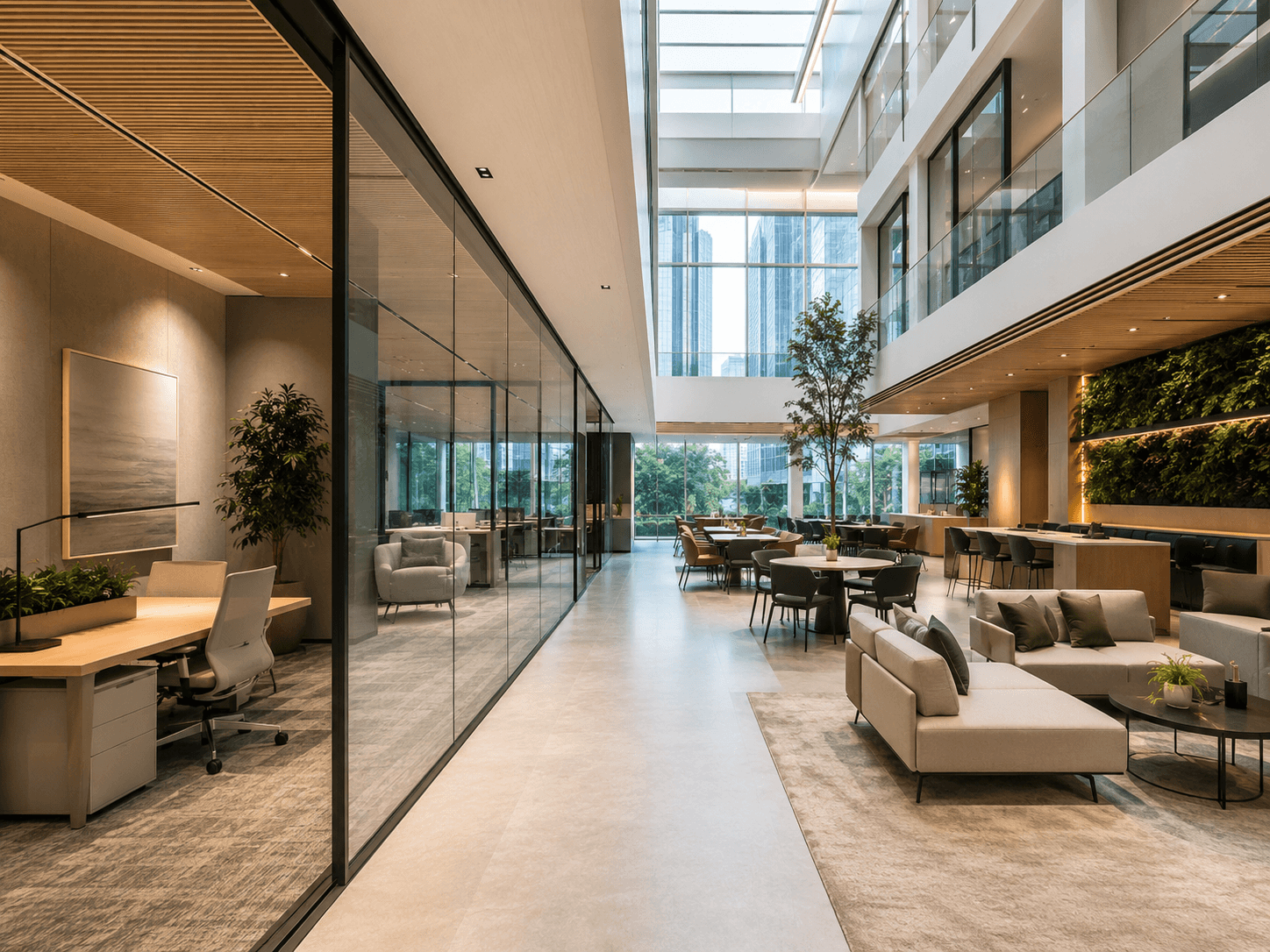
1. The Core Concept: Moving Away from the "Sea of Desks"
The traditional office layout is a monolith—one massive room trying to serve every function simultaneously. The Atrium Layout breaks the floor plan into distinct "neighborhoods" or "centers," each with a specific acoustic profile and operational purpose. Just as we design distinct themed zones for large retail spaces (like a "Golden Row" for high-end retail versus a "Family Zone"), an office requires distinct hubs. This ensures that a loud brainstorming session in the marketing department doesn't derail the finance team's quarterly report.
2. The Collaboration Atrium (The High-Energy Hub)
This is the beating heart of the office. It is loud, dynamic, and designed for spontaneous interaction.
The Cafe Anchor: We often anchor this zone with a high-end, barista-style pantry. If you have read our guide on Why Your Office Breakroom Should Feel Like a Specialty Coffee Shop, you know that applying cafe renovation singapore principles to corporate spaces dramatically boosts employee morale.
Flexible Architecture: This Atrium features modular seating, mobile whiteboards, and high bar tables. It is designed to be easily reconfigured for a company-wide town hall or a casual Friday social.
3. The Focus Atrium (The "Library" Zone)
At the opposite end of the acoustic spectrum is the Focus Atrium. This area is governed by strict "library rules"—no phone calls, no impromptu meetings.
Acoustic Isolation: We utilize heavy acoustic treatments here, including suspended felt ceiling baffles and plush carpeting. We separate this zone from the Collaboration Atrium using physical buffers, such as banks of lockers or enclosed meeting rooms, to block sound transmission.
Solo Workstations: Instead of collaborative benches, we install individual focus pods, high-backed acoustic armchairs, and traditional sit-stand desks with privacy screens.
4. The Wellness Atrium (The Restorative Retreat)
Burnout is a major concern for Singaporean workers. A modern office must provide a space for mental decompression.
Biophilic Design: We design a dedicated Wellness Atrium heavily integrated with nature. Referencing our strategies in The "Breathable" Office: Using Biophilic Design, we use lush indoor planting, natural timber textures, and circadian lighting to create a calm, restorative environment.
Multi-Use Serenity: This space can function as a quiet reading nook, a prayer room, or a low-stimulation zone for neurodivergent employees who need a break from the buzzing main floor.
5. Bridging the Gap: The Transition Zones
The success of the Atrium Layout relies entirely on how employees move between these zones. Just like in a home renovation singapore project where the transition from a public living room to a private bedroom is clearly defined, an office needs transition zones. We use subtle psychological cues—like changing the floor material from hard polished concrete in the Collaboration Atrium to soft, acoustic carpet in the Focus Atrium—to signal to employees that the expected behavior and noise level have changed.
About the Author
This article was written by the team at Skai Atelier, an interior design studio specialising in cafe renovation Singapore, F&B interior design, and commercial renovation Singapore projects.
FAQ: Café Renovation Cost Singapore
1. Does the Atrium Layout require a massive floor plan?
No. While the concept originates from large-scale commercial design, the principles of zoning apply to any size. Even in a compact 1,500 sq ft SME office, we can create a "micro-atrium" layout by placing a vibrant, café-style collaborative table near the entrance, using a central bank of acoustic phone booths as a sound barrier, and placing quiet focus desks at the back near the windows.
2. How do we prevent the Collaboration Atrium from becoming too noisy?
Acoustic design is paramount. Even in high-energy zones, we install sound-absorbing materials disguised as design features—such as perforated timber ceiling panels or fabric-wrapped wall art—to absorb reverberation. For more details on this, you can review our guide on Acoustic Solutions for Open-Plan Offices.
3. Will employees actually use the Focus Atrium, or will they just work from home?
If the Focus Atrium is designed correctly, it offers a level of ergonomic comfort and distraction-free quiet that is often superior to a cramped HDB home office. The key is providing high-quality monitors, ergonomic chairs, and absolute enforcement of the "library rules" culture.
4. How much space should be dedicated to the Wellness Atrium?
It depends on your company culture, but we typically recommend allocating 5% to 10% of the usable floor area to a dedicated wellness or restorative space. The return on investment in employee mental health and reduced absenteeism far outweighs the loss of a few traditional desks.
5. Can we implement an Atrium Layout without replacing all our existing furniture?
5. Can we implement an Atrium Layout without replacing all our existing furniture?
6. How do I get an initial quote for my project?
The best way is to Book a Discovery Call through our website. During this session, we discuss your budget, functional requirements, and design preferences to provide a transparent and comprehensive preliminary estimate.