Smart Home Tech for Seniors: Peace of Mind for Busy Caregivers in Singapore

Smart Home Tech for Seniors: Peace of Mind for Busy Caregivers in Singapore
For the "sandwich generation" in Singapore, balancing a demanding career, raising children, and caring for ageing parents is a daily juggling act. Even when you cannot physically be in the same room as your parents, you want the reassurance that they are safe, comfortable, and independent.
This is where the modern smart home steps in. At Skai Atelier, we seamlessly integrate smart technology into our residential renovation projects. The goal is not to overwhelm elderly residents with complicated gadgets, but to use "invisible" tech that works passively in the background to support them and provide you with absolute peace of mind.
Here are the top smart home integrations every caregiver should consider for a senior-friendly home in 2026.
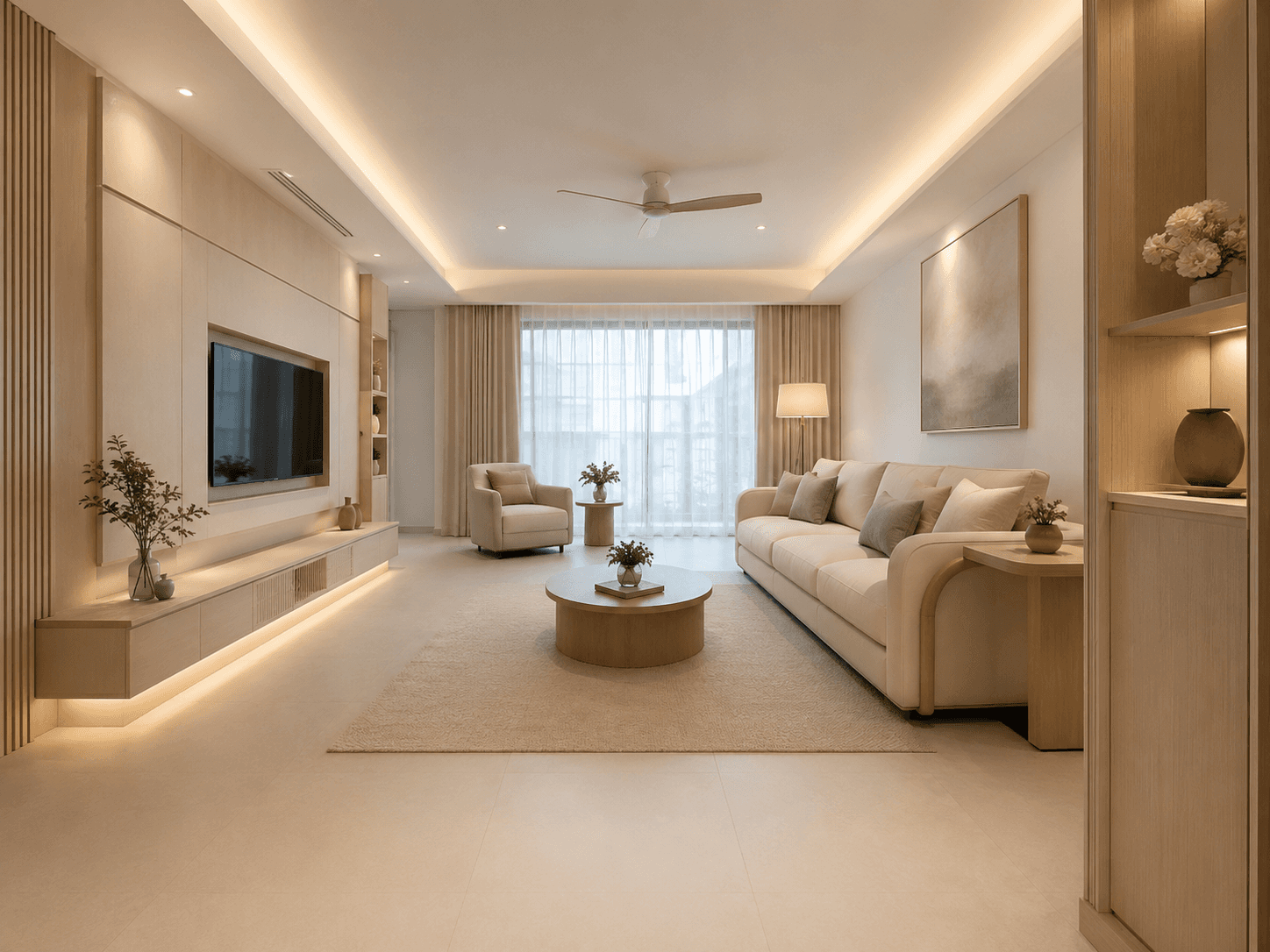
1. Automated Smart Lighting: The First Line of Defense
Navigating a dark corridor at 2 AM is a major fall risk for seniors. Smart lighting eliminates the need to fumble for switches.
Motion-Sensor Path Lighting: We install low-level LED strips along the skirting boards of bedrooms and corridors. These gently illuminate the path to the bathroom the moment your parent swings their legs out of bed, without emitting blinding overhead light.
Voice-Activated Controls: For seniors with mobility issues or arthritis, turning off the main lights from bed using a simple voice command (e.g., "Hey Google, turn off the bedroom lights") is a game-changer.
2. Keyless Entry & Smart Digital Locks
A smart digital lock is one of the most practical upgrades for a multi-generational home or an elder-care suite.
Fingerprint & Facial Recognition: Seniors no longer need to worry about losing their physical keys or struggling with stiff keyholes.
Remote Access for Emergencies: If your parent has a medical emergency and cannot reach the door, or if a healthcare worker needs scheduled access, you can unlock the front door remotely from your smartphone while at the office.
3. Unobtrusive Fall Detection (Without Cameras)
Privacy is paramount, especially in bedrooms and bathrooms where falls are most likely to occur.
Radar-Based Sensors: Instead of invasive CCTV cameras, we integrate mmWave (millimeter-wave) radar sensors into the ceiling design. These sensors detect human presence, posture, and sudden drops (falls) through radio waves. If a fall is detected in the bathroom, the system instantly sends an alert to the caregiver’s phone, entirely preserving the user's privacy.
4. Voice-Controlled Climate and Curtains
Physical exertion should be minimized where possible, especially for tasks that require reaching or pulling.
Motorized Blinds: Heavy blackout curtains can be difficult for seniors to draw. Motorized day and night blinds can be operated via a remote control or put on an automated schedule (e.g., opening at 7 AM for morning sun, closing at 7 PM).
Smart Air-Conditioning: Caregivers can remotely monitor the temperature of the room to ensure it is not too cold, or seniors can adjust it themselves using a voice assistant.
5. Designing Tech to be "Invisible"
The best smart home is one you barely notice. At Skai Atelier, we ensure that the aesthetic of your home is never compromised by technology. We design custom carpentry with built-in cable management to hide ugly wiring, flush-mount sensors into ceilings, and select smart switches that match your high-end interior finishes.
About the Author
This article was written by the team at Skai Atelier, an interior design studio specialising in cafe renovation Singapore, F&B interior design, and commercial renovation Singapore projects.
FAQ: Café Renovation Cost Singapore
1. Are smart home systems difficult for elderly parents to learn?
Not at all, provided the system is designed thoughtfully. The best smart tech for seniors is "passive"—meaning it works without them needing to do anything. Motion-sensor lights, radar fall detectors, and scheduled motorized blinds require zero learning curve. For active controls, simple voice commands are usually much easier for seniors to adopt than navigating smartphone apps.
2. Do I need to rewire my entire HDB flat to install smart lighting?
If you are doing a full renovation with us, we will plan the electrical layout to optimize smart systems from scratch. However, if you are just retrofitting a room, you do not need a complete rewire. We can install wireless smart switches and smart bulbs that connect via Zigbee or Wi-Fi, working seamlessly with your existing electrical points.
3. What happens to smart locks or sensors during a power outage or if the Wi-Fi drops?
Reliable smart digital locks are battery-operated and do not rely on your home's Wi-Fi to function for basic entry (like fingerprint or PIN codes). They also come with physical backup keys or emergency power terminals. For sensors, we recommend systems that use local smart hubs (like Zigbee or Matter) rather than relying purely on cloud Wi-Fi, ensuring basic automations still run even if the internet is down.
4. Are cameras the only way to monitor falls at home?
No. In fact, we strongly advise against cameras in private areas like bathrooms and bedrooms to respect your parents' dignity. We utilize mmWave radar sensors and thermal sensors. These devices detect a person's physical position (standing, sitting, or lying on the floor) and alert caregivers to a potential fall without ever capturing a visual image.
5. Can I use government grants like EASE to pay for smart home technology?
5. Can I use government grants like EASE to pay for smart home technology?
6. How do I get an initial quote for my project?
The best way is to Book a Discovery Call through our website. During this session, we discuss your budget, functional requirements, and design preferences to provide a transparent and comprehensive preliminary estimate.