Café Renovation vs. Full Restaurant Fit-Out: Which Do You Actually Need?

Café Renovation vs. Full Restaurant Fit-Out: Which Do You Actually Need?
If you're planning an F&B space in Singapore, one of the first questions worth answering isn't "what should it look like" — it's "what am I actually building." A café renovation and a full restaurant fit-out sound similar, but they involve different scopes of work, different budgets, and different regulatory requirements. Getting this wrong early is one of the most expensive mistakes a first-time F&B operator can make.
Here's how to tell the two apart, and how to figure out which one your concept actually needs.
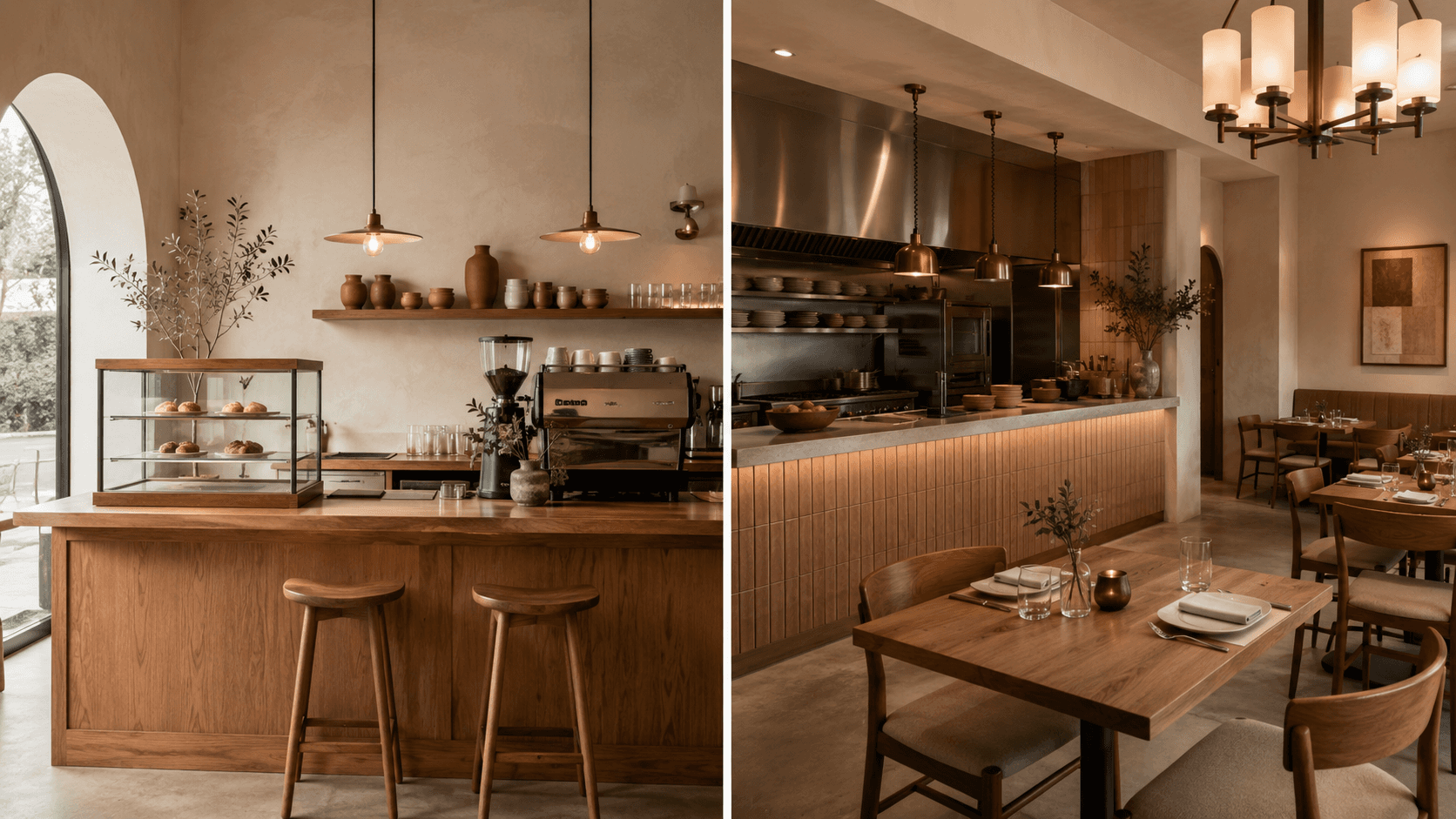
What Counts as a Café Renovation
A café renovation typically focuses on a smaller footprint with a simpler operational flow: counter service or minimal table service, a compact prep area, and a menu built around drinks, pastries, and light bites rather than a full hot kitchen.
This usually means:
A service counter and display area as the centrepiece of the design
A smaller kitchen or prep zone, sometimes without a full exhaust hood system
Seating layouts optimised for turnover and casual dwell time
Simpler mechanical and ventilation requirements
Because the operational footprint is lighter, café renovations are generally faster to design, faster to get approved, and lower in overall cost than a full restaurant build.
What Counts as a Full Restaurant Fit-Out
A restaurant fit-out is a different scale of project. It usually involves a full commercial kitchen, back-of-house storage, staff facilities, and a dining room designed around table service and longer customer dwell time.
This typically involves:
A full commercial kitchen with proper exhaust and grease-trap systems
Compliance with Singapore Food Agency (SFA) requirements for food preparation and storage
Fire Safety and Shelter Department (FSSD) submissions, given the more complex kitchen equipment involved
Back-of-house zones for staff, storage, and waste management
More extensive mechanical, electrical, and plumbing (M&E) coordination
Because of the added kitchen infrastructure and regulatory submissions, restaurant fit-outs take longer to design and build, and carry a meaningfully higher budget than café projects.
Side-by-Side: Key Differences
Café Renovation | Restaurant Fit-Out | |
|---|---|---|
Kitchen scope | Prep area, light equipment | Full commercial kitchen |
Service style | Counter/self-service | Table service |
Licensing complexity | Lower | Higher (SFA + FSSD) |
Typical timeline | Shorter | Longer |
Typical budget | Lower | Higher |
Common use case | Coffee, dessert, light bites | Full dining concepts |
How to Decide Which One You Need
Ask yourself these three questions before committing to a scope:
1. What's your actual menu? If your menu is drinks, pastries, and a handful of light bites, you likely don't need a full commercial kitchen — and building one anyway means paying for infrastructure you won't use.
2. What's your service model? Counter service and quick turnover point toward a café layout. Table service with a multi-course or hot-food-heavy menu points toward a restaurant fit-out, largely because of kitchen and staffing requirements.
3. What can your unit actually support? Not every commercial unit can support a full kitchen — grease trap access, exhaust riser availability, and power capacity all vary by building. This is worth checking with your renovation contractor before you sign a lease, not after. See our checklist before placing your F&B rental deposit for what to verify upfront.
Why This Decision Affects Your Budget More Than Design Choices Do
Business owners often spend their planning energy on finishes and furniture, when the bigger cost driver is almost always kitchen infrastructure and licensing scope. A well-designed café can look every bit as considered as a restaurant — the difference in cost usually comes from what's behind the counter, not what's in front of it. For a full cost breakdown by scope, see our café renovation cost guide.
Getting Your Scope Right From the Start
At Skai Atelier, we start every F&B project by clarifying scope before design — matching your menu, service model, and unit constraints to the right build type, so you're not paying for infrastructure you don't need or under-building for a concept that needs more. This is part of our café renovation and F&B interior design process from day one.
About the Author
This article was written by the team at Skai Atelier, a Singapore-based interior design studio specialising in cafe renovation, F&B interior design, commercial renovation, and residential interiors. Skai Atelier is led by Johnray Lee, whose background in architecture, interior design, and project coordination informs the studio’s practical, design-led approach to renovation planning. Continue reading our café renovation cost in Singapore guide or explore our café renovation Singapore service page.
FAQ: Café Renovation Cost Singapore
Can a café unit be converted into a full restaurant later?
Sometimes, but it depends on the unit's existing M&E capacity — exhaust risers, grease trap access, and power load aren't always retrofittable. It's worth planning for this early if you expect to expand your menu later.
Is a café renovation always cheaper than a restaurant fit-out?
Generally yes, because the kitchen infrastructure and licensing scope are lighter — but a highly customised café can still cost more than a very simple restaurant fit-out. Scope, not category, determines cost.
Do I need SFA approval for a café?
Most F&B units handling food preparation need some form of SFA registration, though the requirements are lighter than for a full kitchen. See our guide on café and commercial licensing requirements for details.
How much longer does a restaurant fit-out take compared to a café renovation?
A café renovation can often be designed and built within 6–10 weeks, depending on unit condition. A full restaurant fit-out typically takes longer — often 3–5 months — once you factor in kitchen equipment lead times, exhaust and grease-trap installation, and FSSD submission and approval timelines.
What happens if I choose the wrong scope for my concept?
What happens if I choose the wrong scope for my concept?
Can I mix formats — for example, counter service with a small hot kitchen?
Yes, and many successful concepts do exactly this. The key is being upfront about your full menu and service flow during planning, so the design accounts for the equipment and ventilation a hybrid format actually needs, rather than treating it as a pure café or pure restaurant build.